
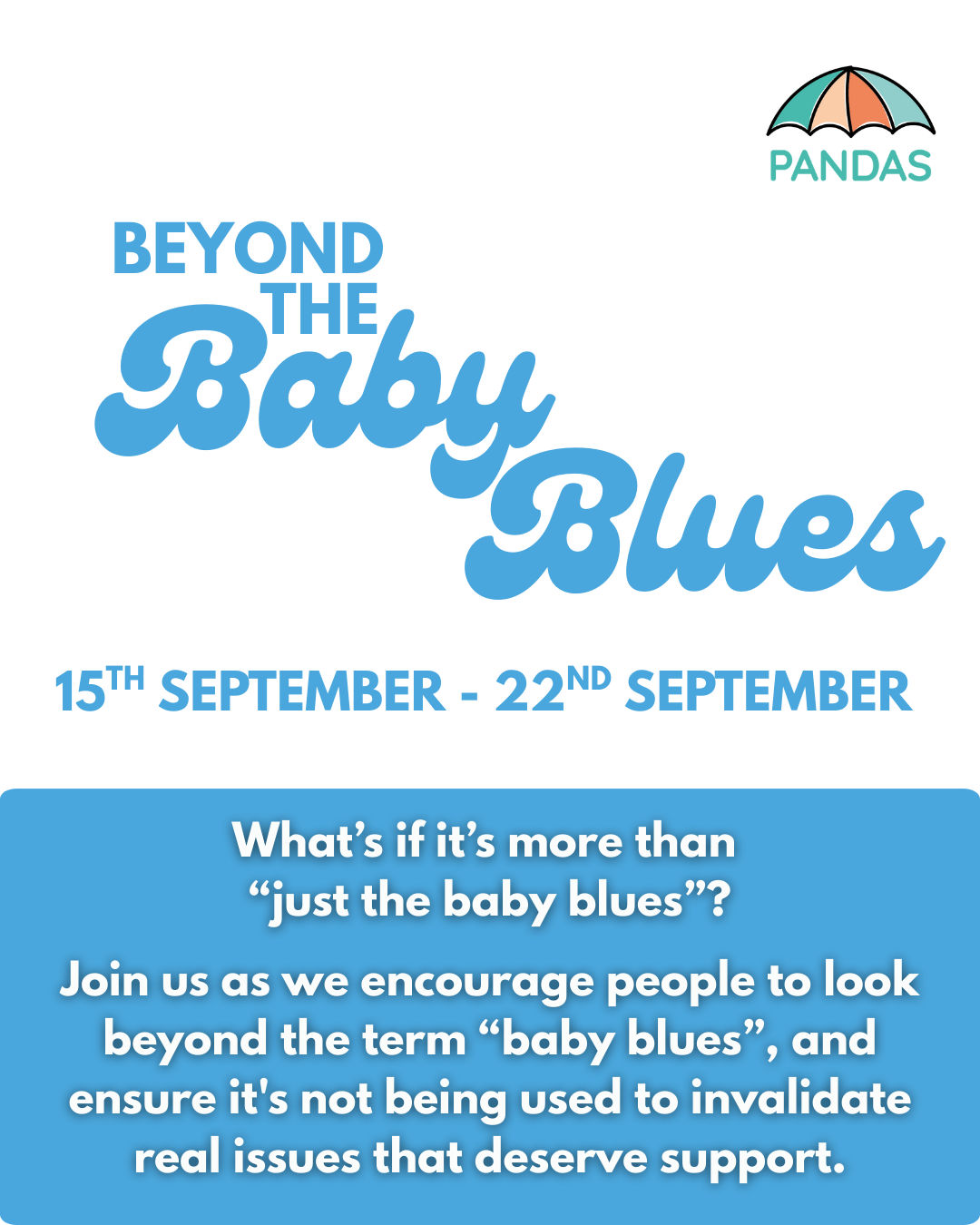
This September, we launched our Beyond the Baby Blues spotlight week – an important awareness drive tackling the misconceptions that still surround perinatal mental health.
For far too long, the phrase “baby blues” has been used as a catch-all explanation for the range of emotional and mental health challenges that new parents can face. While the baby blues is a commonly used term, for the real and temporary adjustment period in the first few days after birth, it is not the same as conditions such as postnatal depression, anxiety, or other perinatal mental illnesses. By blurring the lines between them, many people are left without the right recognition or support. We wanted to acknowledge and encourage understanding between the difference between hormonal changes after giving birth, and perinatal mental illness.
What we set out to do
Our aim was simple: to raise awareness, start conversations, and empower parents to track their mood and seek help when their feelings go beyond the baby blues. We wanted to highlight the lived experiences of parents who have felt dismissed, misunderstood, or unsupported, and to shine a light on the importance of accurate information and compassionate care.
How we shared the message Over the course of the week, our ‘Baby Blues’ centred content received over 300,000 views and we saw a notable increase in engagement and followers. We ran a series of social media posts, videos, and stories from real parents. These personal accounts were at the heart of the campaign, reminding us that behind every statistic is a person who deserves to be heard.
We were also grateful to work alongside partner organisations, professionals and advocates who helped amplify the campaign. Together, we made sure that parents knew they weren’t alone, and that support is always available.
The impact The response was powerful. Parents told us they finally felt seen. Here’s what they said:
The midwives used the term “baby blues” in my medical notes. It felt so very far from what I was feeling.
This gave me goosebumps reading this. 3 babies in 6 years and I can honestly say it’s one of the toughest parts to go through. Definitely more than just the blues.
It trivialises enormous feelings, brushing them under the carpet. When a GP dismissed me at 6 weeks saying it was “just baby blues and will pass” – this was a missed opportunity to signpost me to better support!
The term doesn’t fully reflect how intense your feelings can be. It can make something really overwhelming sound mild or manageable, when for some, it’s anything but
What’s next?
While the campaign has ended, the conversation and upskilling of knowledge continues. Our services remain open for anyone who needs support, whether through our helpline, virtual support, in person support groups, or text service. We will also continue to signpost to our mood tracker to help those struggling decide if they are struggling with the ‘baby blues’ or something more.
The more we challenge myths and misunderstandings, the closer we get to a future where every parent feels validated and supported through the challenges of perinatal mental health.
Thank you to everyone who shared, engaged, or took part in our campaign, “Beyond the Baby Blues”. Together, we’ve taken another step towards breaking down stigma and building a more compassionate community.
How we can support you, now.
We have designed and developed our latest resource, our mood tracker. Designed to work through over a five-week period. Everyday as a commitment to tracking your mood. A self-care tool, a go to for recording how you are feeling and a snapshot of a months’ worth of feelings wherever you are in your trying to conceive through to conception, birth and beyond. We want to be able to support you continuously through tracking your mood alongside our support services, free with no waiting list.
Recent Comments